Pinyin Tianzige: layout, tone rules and printing
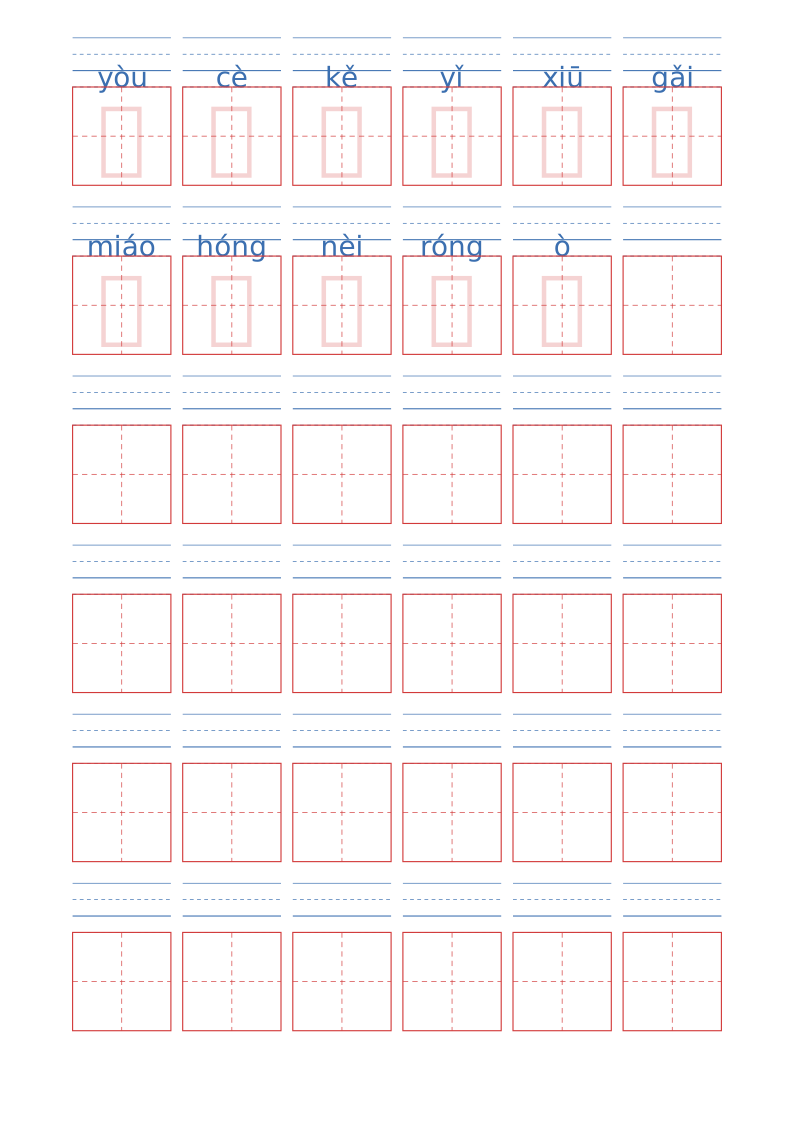
Each unit has four-line pinyin space above and a Tianzige square below. The tone-marked pinyin is added automatically and aligned with the character.
The layout
One unit is a pinyin strip on top of a character square. Four lines let the letters sit at the right height.
Pinyin must align vertically with its character — that alignment is what separates this from simply putting a row of pinyin next to a grid.
Tone rules (handled for you)
The tone mark goes on the vowel: a if present, otherwise o or e; with iu it goes on the second vowel; ü is written u after j q x y but keeps its dots after n and l.
Neutral tones carry no mark. Polyphonic characters default to the common reading and can be corrected one by one.
Printing
Keep the pinyin strip at least 8mm tall (about 4mm per letter band) and the whole unit above 25mm; 30mm suits the earliest years. Twenty to thirty characters per page is a good working amount.